
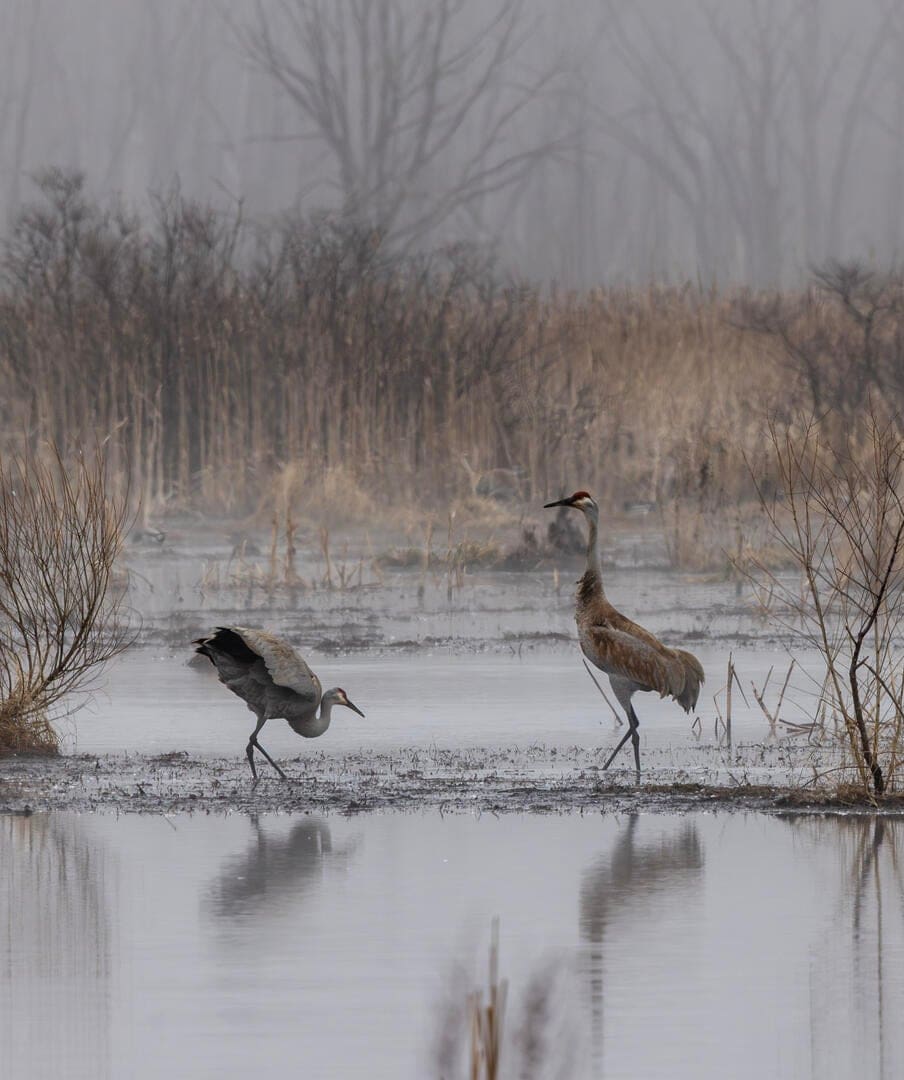
Right now, thousands of sandhill cranes are gathered in the Great Marsh at Indiana Dunes National Park—and it’s an incredible reminder of what habitat restoration can achieve.
For thousands of years, the Great Marsh was a place where land and water converged, migratory birds took refuge, and other wildlife – including mammals, reptiles, amphibians, and insects – called home. However, during the 20th century, the Great Marsh wetland complex’s value was overlooked, and much of its 4,000 acres were drained, dug up, or otherwise destroyed. Since 1998, the National Park Service and its partners have done extensive restoration work in the Great Marsh and sandhill cranes have begun returning in recent years. This week, they have gathered in staggering numbers to use the marsh during migration, filling the wetlands with their unmistakable calls, leaping mating dances, and sweeping flights overhead.
It’s a powerful example of how restoring wetlands creates the conditions wildlife need to return.
The National Park Service and its partners continue to maintain and restore even more of the Great Marsh wetland complex so that future visitors to the national park can experience healthier and more resilient ecosystems. If you would like to learn more about the restoration work that helped make this possible, visit the Save the Dunes website to explore the history, ecology, and ongoing restoration of this remarkable landscape: https://savedunes.org/great-marsh/
If you’d like to see the cranes, they can be spotted in the Great Marsh near Cowles Bog along Mineral Springs Road. If you visit, please remember to give the birds plenty of space. Stay on designated trails and viewing areas, keep noise low, and use binoculars or a zoom lens rather than approaching the birds. The cranes are relying on the marsh as a place to rest and refuel during their long journey.